RCM / Medical Billing
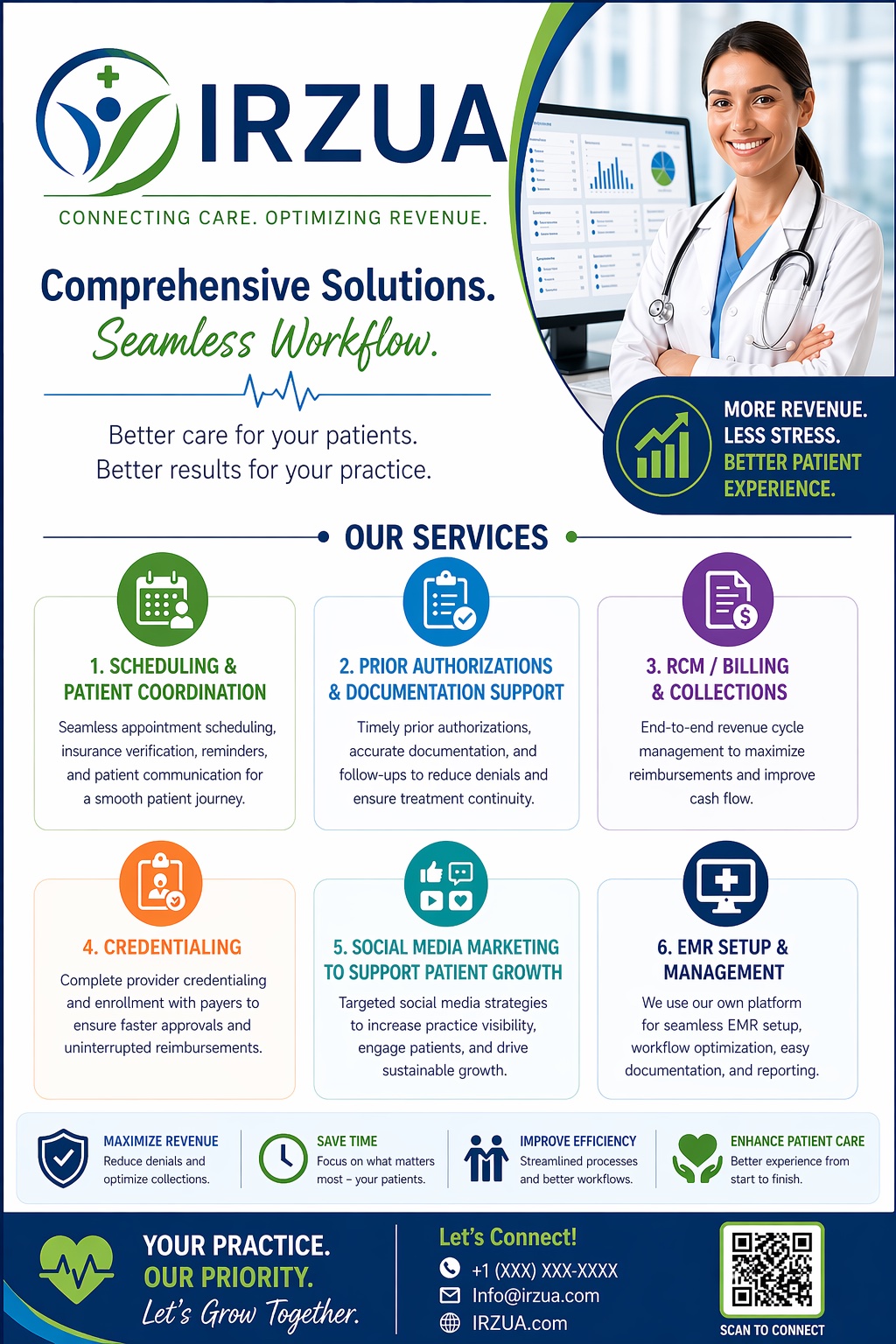
RCM (Revenue Cycle Management) in healthcare, also known as medical billing cycle management, is the complete financial process that healthcare providers use to track patient care from registration to final payment. It begins when a patient schedules an appointment and their insurance eligibility is verified. After the medical service is provided, every diagnosis and treatment is converted into standardized medical codes, which are then used to create a medical claim. This claim is submitted to the insurance company for reimbursement. The insurance payer reviews the claim, checks policy coverage, and either approves, denies, or partially pays it based on medical necessity and contractual agreements. If there are errors or missing details, the claim is rejected and sent back for correction, which is called denial management or claim resubmission.
The main goal of RCM is to ensure that healthcare providers receive accurate and timely payment for the services they deliver while maintaining compliance with insurance regulations and healthcare laws. It also involves patient billing, where any remaining balance after insurance payment is collected directly from the patient. A strong RCM system helps reduce claim denials, improves cash flow, and increases operational efficiency for hospitals, clinics, and medical practices. However, the process can be complex due to changing insurance policies, coding updates, and strict documentation requirements. Overall, healthcare RCM acts as the financial backbone of the medical system, ensuring that providers are compensated properly while patients are billed fairly and transparently.